
A WMSI Story, Part 1
I’ve been a part of the White Mountain Science team in various capacities for the past four years. During this time I’ve had the opportunity to watch WMSI grow and evolve, spreading its influence throughout New England and the rest of the country. In this two-part blog post I hope to highlight just a few of the ways that White Mountain Science, Inc. has positively impacted my life as well as the communities we serve.
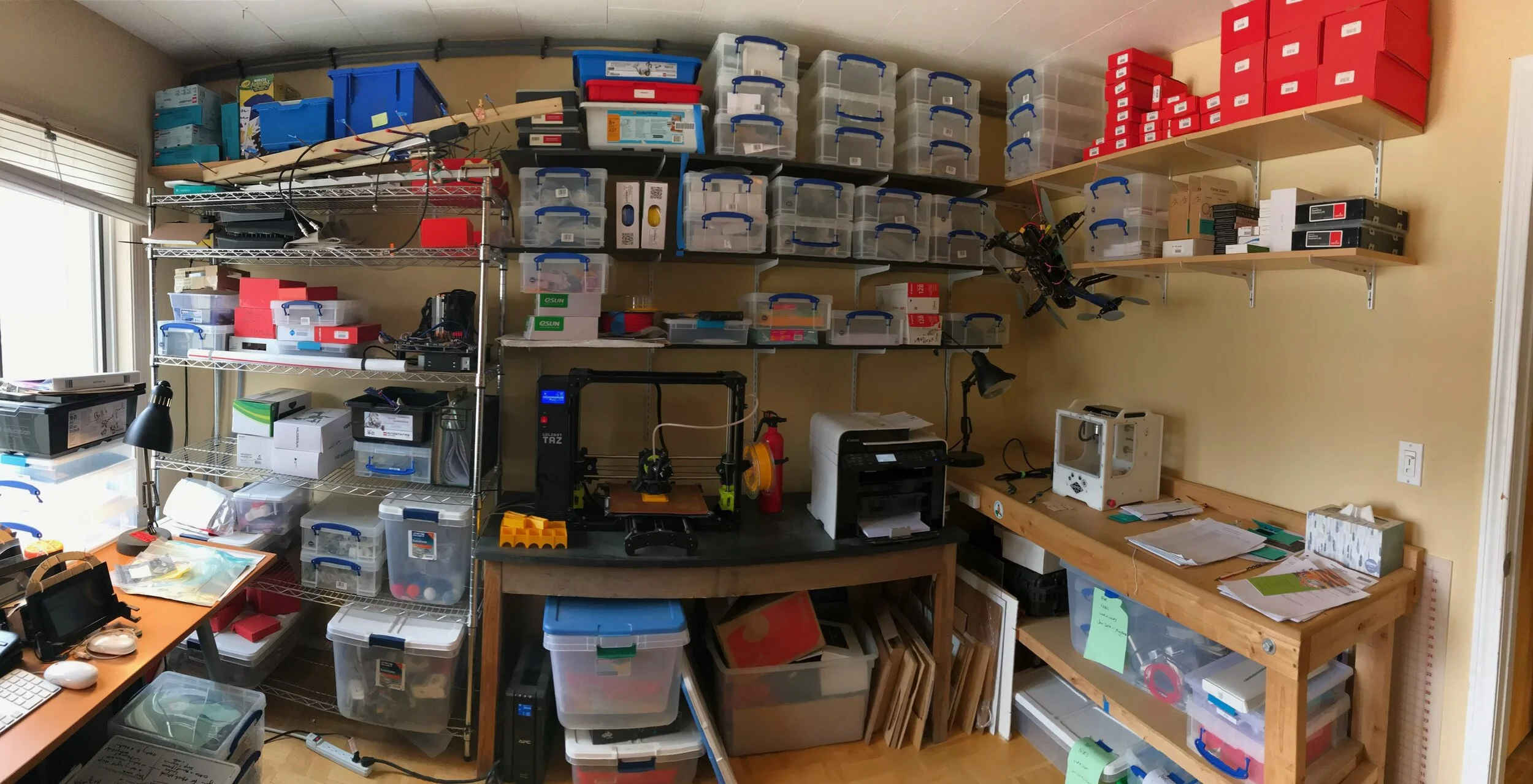
When I was hired by WMSI in 2016 we spun ideas together in our packed-to-the-gills headquarters in Bethlehem, NH. 3D printers whirred alongside robotics supplies in modular plastic boxes, and our daily conversations ranged from summer camp planning to ideas for building out our new Mobile STEM Lab. My role within our small team was multifaceted and this I deeply appreciated: I had just finished my engineering degree and was searching for a way to combine technical skills with creative human interactions. At WMSI I could continue to tinker with education technology while taking on the fresh challenge of building our connections and community.
Hackin’ and Hangin’
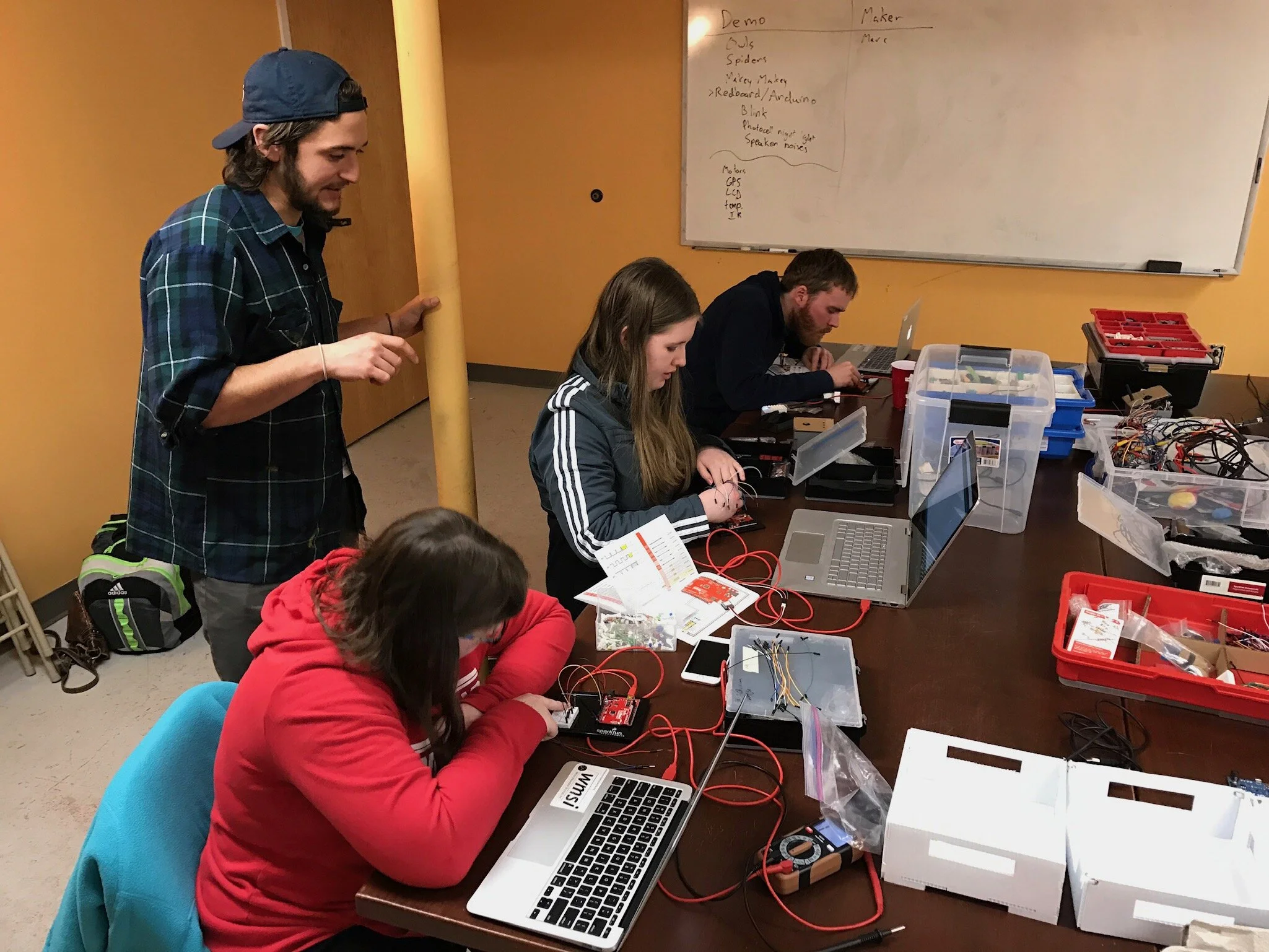
Having spent the past four years supporting STEM outreach in Boston schools, I was excited to find new ways to bring engineering education to northern New Hampshire. At the time our Mobile STEM Lab was just getting started; we offered STEM classes at several local schools, worked with a couple interns, and ran summer camps. The “Hack and Hang” was born from genuine curiosity of what a community hackathon could look like. Supplied with our very own 3D printers, CNC mill, LEGOs, and electronics we ran impromptu clinics and played with each other’s favorite projects. These pizza-fueled evenings turned into a welcome time to dive into pure creativity and often spurred on our parallel efforts developing education technology.
Kit Building
Our first kits, like many aspects of WMSI, were inspired by nature. The “Owl” prototypes were equipped with sensors and exceptional “hearing” in the form of radio transmitters and receivers. These features made it possible to use the kits for technological learning in an outdoor setting, as tested during a treasure hunt lesson with the Woodland Community School. Our Spider kit prototype made paper circuits more engaging by providing a template and tiny “brain” for building webs of flashing lights and tiny sensors.


One thing I’ve always appreciated about WMSI culture is that nothing goes to waste. Even though these kits were never scaled up to production and distribution, the systems we used to build them went on to fuel other branches of our organization. One such branch was the Instructor Developer Corps (IDC). This idea grew out of our budding internship program and turned into a seasonal work offering for college students. I fell in love with this program model because it reflected what I dreamed of for my professional life: a balance of engaging work and outdoor time.

The Instructor Developer Corps
IDC came about as part of a coordinated effort to bring creative problem solvers of all ages into our network. In addition to hosting regular interns from local high schools, we dreamed of offering the WMSI experience to those pursuing a career in a STEM field. Summer IDC turned into a way for engineering students from urban schools to gain work experience while also getting to enjoy some perks of our mountain surroundings.
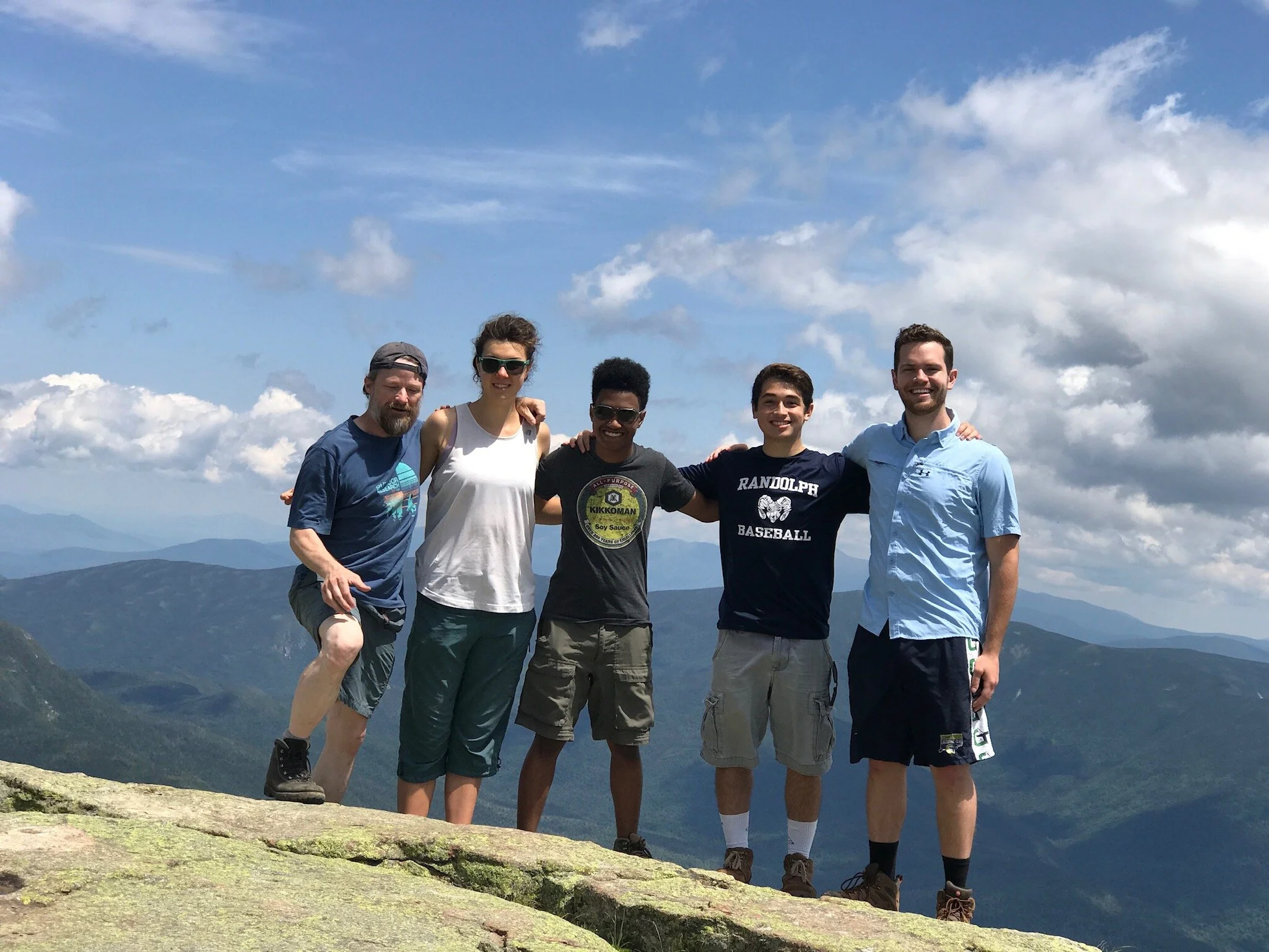
Before this summer, I had made the difficult decision to put a pause on my role at WMSI in order to instruct courses for the Northwest Outward Bound School in central Oregon. I had mixed feelings about leaving my North Country home before seeing IDC fully come together for our summer session. While I didn’t know how my relationship with WMSI would continue to evolve, I was immensely grateful for the support I felt in returning to my outdoor education community. In the coming years I would continue to seek out a balance beween STEM and outdoor education while exploring new ways to work in either field. Check back for the second part of this blog post, where I’ll talk about the beginning of remote work opportunities at WMSI.
- Marc Bucchieri